Skip to content
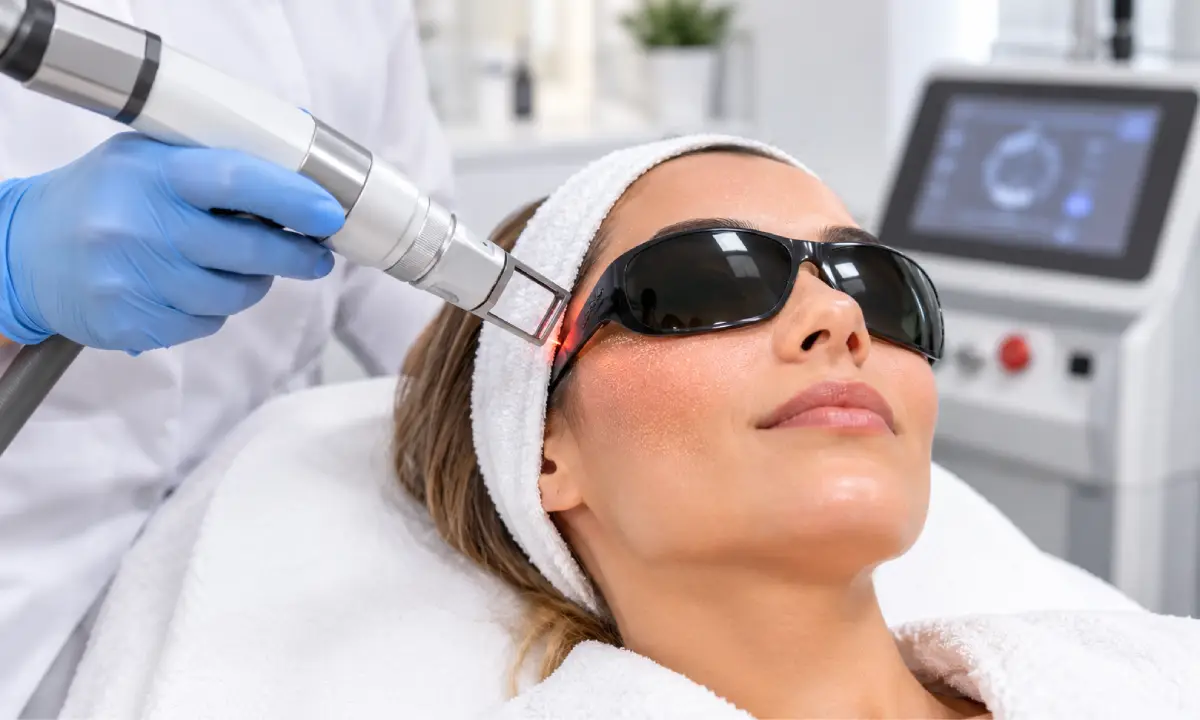
Table of Contents
Deep lines, acne scars, and rough texture can make your skin look more tired than you feel, and at some point a facial or light peel stops being enough. CO2 laser resurfacing typically involves a consultation and a few weeks of skin prep, a numbed treatment session in the office, and about one to two weeks of visible healing before smoother, fresher skin starts to show.
At Dr. Addison Aesthetics, Dr. Addison Zhang offers CO₂ ablative laser treatment in Cary, NC, for patients who want to improve texture, fine lines, and scarring. Here is what each stage looks like, from your first conversation to the months after your appointment.
How Long Is The Downtime After CO2 Laser Resurfacing?
Recovery from CO2 laser resurfacing typically involves about one to two weeks of visible healing. Swelling, redness, and some crusting are typical in the first few days, followed by peeling. Once peeling finishes, new skin usually looks pink for several weeks, and many patients return to work and makeup around then, once their provider clears them. Timing varies with treatment depth.
Before Your Appointment: The Consultation and Skin Prep
Your first step is a consultation with Dr. Zhang, who looks at your skin concerns, reviews your medical history, and talks through your goals. This visit confirms whether laser skin resurfacing is the right fit or whether another option would suit your skin better.
Skin type is a big part of that conversation. Providers use the Fitzpatrick scale, a classification from type I (very fair) to type VI (deep), to judge how skin is likely to respond to heat and light. Deeper skin tones carry a higher risk of pigment changes after ablative lasers, so candidacy and settings are decided case by case.
In the weeks before treatment, your provider may ask you to:
- Pause retinoids, exfoliating acids, and other active skincare for a set period.
- Avoid sun exposure, tanning beds, and self-tanner so your skin starts in a calm, even state.
- Take a preventive antiviral as prescribed if you have a history of cold sores, since laser treatment can trigger a flare.
- Clear your calendar for roughly a week of social downtime while your skin visibly heals.
Planning ahead helps if you have work deadlines, travel, or events coming up.
What Happens During CO₂ Laser Resurfacing
Treatment day starts with cleansing and numbing. A topical anesthetic or local numbing agent is applied and given time to take effect, and this part often takes longer than the laser itself.
Once you’re numb, you’ll wear protective eyewear while Dr. Zhang performs the CO2 laser treatment. Most patients describe a feeling of heat along with a snapping or prickling sensation. Numbing keeps discomfort manageable for most people, and you can ask for a short pause if you need one.
Session length depends on the size of the area and how deep the treatment goes. A small area may take only minutes, while a full face takes longer. Your provider sets the depth and intensity based on your main concern (fine lines, acne scars, or overall texture) and your skin type.
How Your Skin Looks and Feels Right After Treatment
Expect your skin to look red and feel warm when you leave, similar to a strong sunburn. A healing ointment is applied before you go home, and mild swelling may start within a few hours.
A few practical steps help the first night go smoothly. Arrange a ride home if your provider recommends it, keep the ointment layer in place, and sleep with your head propped up on an extra pillow to help limit swelling.
Your CO₂ Laser Resurfacing Recovery Timeline
CO2 laser recovery follows a fairly predictable pattern, though the timing varies with treatment depth and how your skin heals.
Days 1 to 3: Swelling and Oozing
The first few days are the most intense. Swelling, redness, and a sunburn-like sting are expected, and depending on treatment depth, some oozing or crusting is normal. Swelling usually eases after the first two to three days. Gentle cleansing as directed and a steady layer of ointment keep your skin protected while it heals.
Days 4 to 7: Peeling and Flaking
Around this point, your skin may darken slightly before it begins to peel as new skin forms underneath. Itching is common. As tempting as it is, let peeling skin shed on its own, because picking raises the risk of scarring and pigment changes. After deeper treatments, some flaking can continue into the second week.
Week 2 and Beyond: Pink Skin and Early Changes
Once peeling finishes, new skin typically looks pink and can stay that way for several weeks. Many patients return to work and makeup around this point, once Dr. Zhang clears them to do so. Your new skin is more sensitive to the sun for a while, so daily sun protection becomes your top priority, especially during long, sunny North Carolina summers.
Aftercare That Supports Healthy Healing
How you care for your skin at home has a real effect on how recovery goes. Core aftercare steps include:
- Cleanse gently as directed, without scrubbing or using hot water.
- Keep skin covered with the recommended ointment or moisturizer so it doesn’t dry out.
- Leave crusting and peeling alone, with no picking or scratching.
- Wear SPF 30 or higher every day once your provider says your skin is ready, and limit direct sun.
- Skip makeup, retinoids, and other active products until you’re cleared to restart them.
Call the office if you notice pain that is getting worse instead of better, unusual discharge, fever, or blistering. These can signal infection or another issue that needs prompt attention. Following your provider’s instructions closely is one of the biggest factors in a smooth recovery.
When CO₂ Laser Resurfacing Results Start to Show
Early CO2 laser results usually appear once peeling ends, when many patients notice smoother, brighter skin. Collagen remodeling continues for roughly three to six months, so improvement in fine lines and acne scars tends to build gradually rather than all at once.
Results vary based on your skin condition, treatment depth, and how closely you follow aftercare. Some patients pair resurfacing with Sylfirm X RF microneedling or Ultherapy® to address firmness at deeper layers, and Dr. Zhang can talk through whether combining treatments makes sense for you.
Planning Your CO₂ Laser Resurfacing in Cary, NC
Knowing what happens at each stage makes CO2 laser resurfacing feel far more manageable. The downtime is real, but it’s predictable, and results keep developing for months afterward. If texture, lines, or acne scars have been bothering you, our team at Dr. Addison Aesthetics would be glad to help you find out whether this skin resurfacing treatment fits your skin and your schedule. Ready to refresh your skin? Schedule a consultation to find out if CO2 laser resurfacing is right for you.